http://www.sindhtelegraph.com/index.php/education/32-education/917-lakhiyun-jo-darro-a-5500-years-old-civilization-victim-of-government-neglect-
“Lakhiyun Jo Darro” a 5,500 years old civilization victim of government neglect
Written by Yasir Babbar
Monday, 31 May 2010 18:59
A Sindh Telegraph exclusive by: Yasir Babbar
“Lakhiyun Jo Darro” a 5,500 years old Indus civilization; a victim of ignorant citizens, and un-interested government of Sindh
Lakhian Jo Darro, 5,500-years-old historical place in Sindh is still waiting for Go dot, who will come and give it rebirth for the young generation of the province. So far, Pakistan Peoples Party’s Sindh government has turned a blind eye towards this archeological marvel.
Though, PPP’s government has entered in the 3rd year of rule, but they didn’t do anything for the preservation and development of Lakhian Jo Darro. While, Asif Ali Zardari, after becoming the President of Pakistan, had decided to return the control of historical places to the provincial government, but the actual control and authority has yet to be transferred to Sindh, from the federal government. Earlier, Federal government was looking after the Sindh’s archeological sites.
Actually, it’s the main responsibility of provincial culture department, and the reins of this important portfolio are in hands of Sasui Palijo.
Though, Sasui Palijo hails from a very important political, social, and literary family of Sindh, but she hasn’t play a significant role in this regard. Perhaps, due to the lack of power and authority.
Earlier, minister Sasui Palejo had visited the Lakhian Jo Darro in 2009, and granted only a meager amount of Rs2 million for the development and security of the remains. In this connection, a police check post was established at, and exploration work had started again on the site. But all of a sudden work was stopped.
After the stopping of excavation work, police department had felt that the constables are wasting their time at the check post, thus, they removed the check post without a notice.
In present situation, the historical site of Lakhian Jo Darro is looking like an open field, where the labourers from brick kilns are digging ground of this very important archeological site to collect dirt for making bricks, while the authorities of culture department and Sahah Latif University team are taking a deep sleep.
Near past back ground:
In the era of Arbab Ghulam Rahim, ex Chief Minister of Sindh, SITE department had allotted the plots of Lakhian Jo Darro for the construction of a marble factory. Soon after, this issue was taken by media and the SITE department was compelled to cancel the allotments.
After this issue, Kamran Lashari, the Project Director of provincial government’s special initiatives at that time, had visited the site and granted Rs.1 Million for the excavation of Lakhain Jo Darro.
“Lakhiyun Jo Darro” a 5,500 years old civilization victim of government neglect
Talking to The Sindh Telegraph, Ghulam Mustafa Shar, ex Chairman of Department of Archeology SALU, has said that I was the chairman, when SITE department of Sukkur had allotted the plots of LJD site for the construction of the factories. He added that, we had launched a movement against this step with the help of media.
Mr Shar said that after the cancellation of plots, Sindh government had given a grant of 1 Million rupees for the development of Lakhianm Jo darro, but soon after the Vice chancellor of SALU Dr Neelofer Shaikh removed me from the post of chairmanship without any reason.
He further said its proper job of culture department to further explore the very historic place, and build a museum, which is necessary for the saving of LJD.
This correspondent had made several attempts to contact the vice chancellor of SALU, Dr. Nelofar Shaikh, for her comments on this issue, but she was never available to talk to. Interestingly, Dr. Shaikh is a renowned archeologist herself, and the first ever excavation work on LJD was started under her supervision.
Lakhian Jo Darro is situated near a village and graveyard named Lakha, in Sukkur. The area is in the middle of the city in the middle of the industrial site; the plots for which were allotted in 1970s. Unfortunately the archaeologists had not surveyed the area at that time. Now this area is under Sindh Industrial Trade Estate (SITE) department and is called the Industrial Area of Sukkur.
Yasir Babbar is a sindh based free lance journalist. He has contributed to many Sindhi, English, and Urdu newspapers and magazines.
http://yasirbabbar.blogspot.com/
The Fort of DIJI ( Kotdiji Jo Qilo)
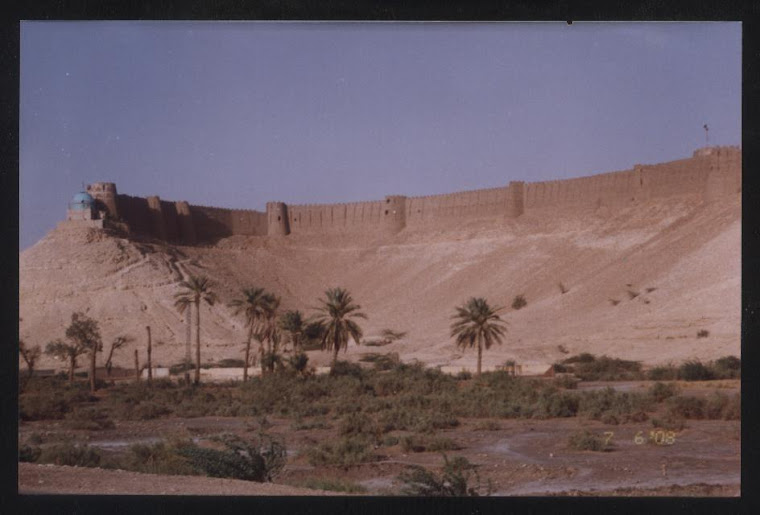
The Fort of DIJI ( Kotdiji Jo Qilo), about 200 years old archiliogical place situated at District Kher Pur Mir's Of Sindh. This pr-historical place is going to destroy day by day but govt has no time to look after it. (Picture by Yasir Babbar)
Friday, June 11, 2010


Friday, June 26, 2009
CONFLICT REPORTING
http://www.newsline.com.pk/NewsJun2009/specialrp2june2009.htm
Special Report
Separate Ways
The separatist movement in Balochistan dates back to the beginning of Pakistan itself
By Yasir Babbar
The separatist movement in Balochistan has gained momentum, and relations between the province and the centre are at an all-time low. Just two months back, three Baloch nationalist leaders, Ghulam Muhammad Baloch, president of the Baloch National Movement (BNM), Lala Munir Baloch, member of the BNM’s central committee, and Sher Muhammad Baloch, joint secretary of the Balochistan Republican Party (BRP), were killed. Their killings prompted another bout of violence in Balochistan and have further strengthened support for separatists. The Baloch believe that state agencies are responsible for the killings, while the government has claimed that non-state elements who want to destabilise the country are responsible. There are also reports that separatists are threatening schools and colleges that hoist the Pakistani flag and sing the national anthem.The list of grievances of the Baloch separatist movement is long. According to federal government facts and figures, Balochistan gives the centre $1.4 billion per annum but receives only $116 million. Similarly, it is mentioned in the Pakistan Energy Book 2007 that Balochistan, which produces the most gas in the country after Sindh, only consumes about one quarter of its production output. Gas from Sui reached all the major cities outside Balochistan from 1953 onwards but reached Balochistan only in 1986, and many areas in the province still do not receive any gas. Similarly, Gwadar – one of the only three deep-sea ports in Pakistan – is a bone of contention, with the Baloch claiming that it is being run for the benefit of outsiders.Education in the province is in a shambles and violence is so endemic that Dera Bugti and Kohlu are still no-go areas. More than 80,000 displaced families are living in harsh conditions in Sindh and the Punjab. Arbitrary arrests, disappearances, blockades and restrictions on freedom of movement have not ceased. As observed by many Baloch politicians, the troops are still active, their intelligence networks still operational and hounding people struggling for their rights. It is estimated that around 40,000 army troops are deployed in Balochistan, in addition to more than 100,000 Frontier Corps personnel. The resource-rich Balochistan is facing increasing poverty and unemployment, its GDP is constantly declining and while government spending on law and order has increased, investment levels are still anaemic. While this latest conflict has the potential to grow into the most dangerous one, it is not the first time that relations between Balochistan and the centre have turned violent. In fact, it has happened five times before, in 1948, 1958, 1962, 1973-1977 and then from 2005-2006.The first struggle for Baloch independence was launched soon after the annexation of the princely state of Kalat by the centre and its subsequent refusal to grant the state internal autonomy. The Baloch interpreted the move as a unilateral violation of the Sandeman System (the Baloch-British agreement that granted autonomy to the sardars). This resulted in civil unrest, with Prince Abdul Karim Khan, the younger brother of the Khan of Kalat, deciding to lead a national liberation movement on April 16, 1948. He invited the leading Baloch nationalist members – the Kalat State National Party, the Baloch League and the Baloch National Workers Party among others – to join the fight for a creation of an independent ‘Greater Balochistan.’Prince Karim initially solicited Indian support but that was not forthcoming, as New Delhi did not extend logistical and political support on the advice of its British Governor-General, Lord Mountbatten. Prince Karim, along with other prominent Baloch leaders, decided to migrate to Afghanistan in June 1948. Pakistan alleged that India had incited the prince, through the Hindu Baloch (about 19% of Balochistan’s population at that time), and some communist leaders of Sindh, who maintained good relations with Indian communists. It also depicted the Baloch nationalist leaders as being pro-Moscow.Karim also organised the Baloch Mujahideen, a liberation force comprising former soldiers and officers of the Khan’s army. The Baloch liberation army had separate wings: Jaannisar (the devotee), Jaanbaz (the daring), and the fidayeen (suicide squads). His GHQ was known as Bab-i-Aali (secret war office). However, the first Baloch liberation army did not comprise large numbers. Prince Karim’s efforts were further weakened by Afghanistan and the Soviet Union’s unwillingness to offer assistance.There was a second Baloch resistance movement in 1958, when the Khan of Kalat organised a rebellion to secede from Pakistan. President Iskander Mirza directed the Pakistan Army to take control of the Kalat palace and arrest the Khan on charges of sedition.Informed circles asserted that Iskander Mirza had played up the dormant dreams of the Khan and encouraged him to raise the banner of revolt so that it could justify imposition of martial law. After the arrest of the Khan of Kalat, there were spontaneous disturbances in most parts of Balochistan that continued for about a year. It was during these disturbances that Nouroz Khan alias Babu Nouroz, who was the head of the Zarakzai tribe, also started a revolt.Babu Nouroz’s band of fighters, numbering only about 150, fought valiantly against the army, headed by Lt Col Tikka Khan. There are reports that Tikka Khan got Nouroz Khan to surrender by making him take an oath on the Holy Quran. He and his followers, including his sons and nephews, were taken to Hyderabad Jail, where his sons and nephews were executed for armed rebellion against the state. Nouroz was held in prison where he died at the age of 90. The Khan of Kalat was subsequently forgiven and freed.Following the surrender of Nouroz, Tikka Khan launched campaigns in the Zarakzai, Achakzai, Marri and Bugti territories. According to Baloch chroniclers, over 1,000 Baloch civilians lost their lives in these operations.The third Baloch uprising was both more effective and widespread than the movements which had preceded it. It was initially triggered by the Marri tribe in 1962, when they objected to the rapid migration of Punjabis to the province, the attempted curtailment of privileges of the sardars and the lack of development projects in the area. This movement was, as usual, suppressed by the government.The violence died down somewhat between 1965-1971, as hostilities broke out between Pakistan and India. However, the secession of East Pakistan inspired Baloch nationalists to demand greater autonomy. But then Prime Minister Zulfikar Bhutto turned down the Baloch’s requests for a greater share in Pakistan’s resources and more autonomy. Baloch leaders had also been provoked by Yahya Khan’s decision to abolish the one-unit scheme and create an integrated province of Balochistan on July 1, 1970. Belying the expectations of the military junta, the National Awami Party (NAP) and the Jamiat Ulema-e-Islam (JUI) secured a majority in the general elections of 1970. But Bhutto decided to delay devolving power to the elected parties in Balochistan.NAP and JUI leaders continued to demand a larger say in the affairs of the province. But Bhutto refused to negotiate with chief minister Ataullah Mengal and JUI head, Mufti Mahmood. This propelled the Baloch tribes to resort to an armed struggle. The Baloch rebellion took a serious turn when Bhutto sacked two provincial governments within six months, arrested two chief ministers, two governors and 44 MNAs and MPAs. He managed to obtain a Supreme Court order banning the NAP and ordered trial of all its leading members on charges of high treason.The civil disobedience movement launched by the Marri, Mengal, Bugti, Zarakzai and other tribes soon turned into an armed struggle. Mir Hazar Khan Marri led the Baloch liberation movement under the banner of the Balochistan Peoples Liberation Front (BPLF). But, the BPLF was eventually forced to move to Afghanistan along with thousands of its supporters. From the original BPLF, the Baloch people, in recent times, have branched into organisations like the BLA, BLM, BLO, etc. There also exists a Balochistan government in exile in the US, with branches in Europe.Pakistan alleged clandestine Indian and Afghan assistance to the rebels. Bhutto sent in the army in 1973 and the air force was also inducted to fight about 20,000 Baloch insurgents. Iran, fearing a similar uprising by its own Baloch groups, assisted Pakistan by supplying helicopter gunships and pilots. It is alleged that Reza Shah Pehalvi was asked by the US to come to the rescue of Bhutto, who had established a bridge between Washington and Beijing. Washington was also worried about India staging another ‘Bangladesh coup’ in Balochistan. The movement was mercilessly suppressed by the Pakistan Army, air force and the ISI, inflicting estimated casualties of about 15,000 Baloch people.There were further problems during the reign of General Zia-ul-Haq, who had appointed General Rahimuddin Khan as martial law administrator and governor of Balochistan. While General Rahimuddin initiated some development activities, he ruled the province with an iron fist, curtailing the powers of the tribal sardars. Several hundred Baloch were incarcerated and Punjabis, mohajirs and Sindhis were brought into the province to weaken the indigenous population. Census operations conducted under Rahimuddin reduced the Baloch headcount. General Zia declared a general amnesty for those willing to give up arms. Tired and terrified, minor sardars surrendered to the military machine of Pakistan, isolating feudal leaders such as Nawab Akbar Khan Bugti and Ataullah Mengal.According to media reports, the fifth phase of the Baloch insurgency was triggered off by the sexual assault of a female doctor, Shazia Khalid, by an army officer – allegedly Captain Hammad – at the Pakistan Petroleum Limited compound in the Sui area of Balochistan. She was living in a high-security zone of the gas plant, which was guarded by the Defence Security Guards (DSG). Islamabad handled the matter in a cavalier fashion. Accumulated anger incensed the people and they mounted an attack on the Sui facility.Nawab Akbar Bugti, the chairman of the Jamhoori Watan Party and former governor and chief minister of Balochistan, stated that the attack was a manifestation of the anger of the people and had nothing to do with the nationalist struggle for freedom by the tribals. General Musharraf retaliated by ordering the ISI and the army to mount operations against rebel Baloch forces headed by Akbar Bugti, who was allegedly assassinated in a missile attack by the army in 2006.After the killing of Akbar Bugti, his grandson, Nawab Brahamdagh Khan Bugti, took over, changed the party’s name to the Balochistan Republican Party (BRP), and also changed the party’s agenda: to struggle for a separate Balochistan (Many nationalist politicians claim that Brahamdagh Bugti is currently headquartered in the village of Spin Boldak, across the border in Afghanistan). Soon after, however, Akbar Bugti’s son, Nawab Talal Bugti, announced that he would restart the JWP, which would continue to work in accordance with its original vision of a search for a moderate political solution. “I oppose my nephew’s independence movement,” said Talal Bugti. “I prefer to keep the party as an icon of the federation.”Later, when former MPA Mir Balaach Marri was assassinated by the Pakistan Army, his younger brother moved to London where he now operates from. According to well-informed circles, the Baloch have established a strong base in London from where they are running a campaign to gain the support of other countries to set up an independent Balochistan, and alongside the Baloch Liberation Army and other armed groups, are waging a battle against the Pakistan Army, the FC and security agencies.The situation seemed to have taken a turn for the better after the PPP victory in the 2008 elections, which was followed by an apology from President Asif Zardari to the people of Balochistan for the excesses committed against them in the past. Zardari also announced that an All-Parties Conference would be held to address the problems of the province and that a Truth Commission would be formed to give a platform for the Baloch people to voice their grievances. Following these moves, the three armed militant groups, the BLA, the Baloch Republican Army and the Baloch Liberation Front announced a ceasefire in the province.But a year later, when the government failed to convene the All-Parties Conference and set up the Truth Commission, the three militant groups withdrew their four-month ceasefire. Subsequently, with the assassination of the three Baloch nationalist leaders, the situation in the province began to deteriorate. Interior Minister Rehman Malik accuses the “foreign hand” of fishing in Balochistan’s troubled waters. In his policy statement to the Senate session on April 22, Malik claimed that the government had proof of foreign involvement in Balochistan. He specifically accused Russia and India of supporting the BLA and fomenting trouble in the province.Malik also pointed out that 4,000 to 5,000 Baloch people had received training in several centres in Afghanistan and he shared more details with the legislators during the in-camera proceedings of the House.Senator Hasil Bizenjo accuses Malik of levelling false accusations to deflect attention from the real problems of Balochistan. He maintains that when Pakistan does not give the Baloch ownership rights over their resources like gas and oil reservoirs and the Gwadar port, they will naturally turn towards foreign hands for help.Some observers also speak of US involvement in the province. They maintain that the US has long harboured a plan to keep a grip on Balochistan for strategic reasons and has been unhappy with Pakistan’s decision to contract out work on the Gwadar port to China. The US would want to block out China from the region.All of this may well be true, but the fact remains that unless the federal government redresses the grievances of the Baloch, it cannot salvage the situation. It has to put its own house in order, instead of resorting to the blame game.Given the growing anti-Pakistan sentiment in Balochistan, the Pakistani government will have to move fast and deliver on its promises to grant substantive political and economic autonomy to the people or this battle may well be the last.
yasirbabbar@gmail.com
Special Report
Separate Ways
The separatist movement in Balochistan dates back to the beginning of Pakistan itself
By Yasir Babbar
The separatist movement in Balochistan has gained momentum, and relations between the province and the centre are at an all-time low. Just two months back, three Baloch nationalist leaders, Ghulam Muhammad Baloch, president of the Baloch National Movement (BNM), Lala Munir Baloch, member of the BNM’s central committee, and Sher Muhammad Baloch, joint secretary of the Balochistan Republican Party (BRP), were killed. Their killings prompted another bout of violence in Balochistan and have further strengthened support for separatists. The Baloch believe that state agencies are responsible for the killings, while the government has claimed that non-state elements who want to destabilise the country are responsible. There are also reports that separatists are threatening schools and colleges that hoist the Pakistani flag and sing the national anthem.The list of grievances of the Baloch separatist movement is long. According to federal government facts and figures, Balochistan gives the centre $1.4 billion per annum but receives only $116 million. Similarly, it is mentioned in the Pakistan Energy Book 2007 that Balochistan, which produces the most gas in the country after Sindh, only consumes about one quarter of its production output. Gas from Sui reached all the major cities outside Balochistan from 1953 onwards but reached Balochistan only in 1986, and many areas in the province still do not receive any gas. Similarly, Gwadar – one of the only three deep-sea ports in Pakistan – is a bone of contention, with the Baloch claiming that it is being run for the benefit of outsiders.Education in the province is in a shambles and violence is so endemic that Dera Bugti and Kohlu are still no-go areas. More than 80,000 displaced families are living in harsh conditions in Sindh and the Punjab. Arbitrary arrests, disappearances, blockades and restrictions on freedom of movement have not ceased. As observed by many Baloch politicians, the troops are still active, their intelligence networks still operational and hounding people struggling for their rights. It is estimated that around 40,000 army troops are deployed in Balochistan, in addition to more than 100,000 Frontier Corps personnel. The resource-rich Balochistan is facing increasing poverty and unemployment, its GDP is constantly declining and while government spending on law and order has increased, investment levels are still anaemic. While this latest conflict has the potential to grow into the most dangerous one, it is not the first time that relations between Balochistan and the centre have turned violent. In fact, it has happened five times before, in 1948, 1958, 1962, 1973-1977 and then from 2005-2006.The first struggle for Baloch independence was launched soon after the annexation of the princely state of Kalat by the centre and its subsequent refusal to grant the state internal autonomy. The Baloch interpreted the move as a unilateral violation of the Sandeman System (the Baloch-British agreement that granted autonomy to the sardars). This resulted in civil unrest, with Prince Abdul Karim Khan, the younger brother of the Khan of Kalat, deciding to lead a national liberation movement on April 16, 1948. He invited the leading Baloch nationalist members – the Kalat State National Party, the Baloch League and the Baloch National Workers Party among others – to join the fight for a creation of an independent ‘Greater Balochistan.’Prince Karim initially solicited Indian support but that was not forthcoming, as New Delhi did not extend logistical and political support on the advice of its British Governor-General, Lord Mountbatten. Prince Karim, along with other prominent Baloch leaders, decided to migrate to Afghanistan in June 1948. Pakistan alleged that India had incited the prince, through the Hindu Baloch (about 19% of Balochistan’s population at that time), and some communist leaders of Sindh, who maintained good relations with Indian communists. It also depicted the Baloch nationalist leaders as being pro-Moscow.Karim also organised the Baloch Mujahideen, a liberation force comprising former soldiers and officers of the Khan’s army. The Baloch liberation army had separate wings: Jaannisar (the devotee), Jaanbaz (the daring), and the fidayeen (suicide squads). His GHQ was known as Bab-i-Aali (secret war office). However, the first Baloch liberation army did not comprise large numbers. Prince Karim’s efforts were further weakened by Afghanistan and the Soviet Union’s unwillingness to offer assistance.There was a second Baloch resistance movement in 1958, when the Khan of Kalat organised a rebellion to secede from Pakistan. President Iskander Mirza directed the Pakistan Army to take control of the Kalat palace and arrest the Khan on charges of sedition.Informed circles asserted that Iskander Mirza had played up the dormant dreams of the Khan and encouraged him to raise the banner of revolt so that it could justify imposition of martial law. After the arrest of the Khan of Kalat, there were spontaneous disturbances in most parts of Balochistan that continued for about a year. It was during these disturbances that Nouroz Khan alias Babu Nouroz, who was the head of the Zarakzai tribe, also started a revolt.Babu Nouroz’s band of fighters, numbering only about 150, fought valiantly against the army, headed by Lt Col Tikka Khan. There are reports that Tikka Khan got Nouroz Khan to surrender by making him take an oath on the Holy Quran. He and his followers, including his sons and nephews, were taken to Hyderabad Jail, where his sons and nephews were executed for armed rebellion against the state. Nouroz was held in prison where he died at the age of 90. The Khan of Kalat was subsequently forgiven and freed.Following the surrender of Nouroz, Tikka Khan launched campaigns in the Zarakzai, Achakzai, Marri and Bugti territories. According to Baloch chroniclers, over 1,000 Baloch civilians lost their lives in these operations.The third Baloch uprising was both more effective and widespread than the movements which had preceded it. It was initially triggered by the Marri tribe in 1962, when they objected to the rapid migration of Punjabis to the province, the attempted curtailment of privileges of the sardars and the lack of development projects in the area. This movement was, as usual, suppressed by the government.The violence died down somewhat between 1965-1971, as hostilities broke out between Pakistan and India. However, the secession of East Pakistan inspired Baloch nationalists to demand greater autonomy. But then Prime Minister Zulfikar Bhutto turned down the Baloch’s requests for a greater share in Pakistan’s resources and more autonomy. Baloch leaders had also been provoked by Yahya Khan’s decision to abolish the one-unit scheme and create an integrated province of Balochistan on July 1, 1970. Belying the expectations of the military junta, the National Awami Party (NAP) and the Jamiat Ulema-e-Islam (JUI) secured a majority in the general elections of 1970. But Bhutto decided to delay devolving power to the elected parties in Balochistan.NAP and JUI leaders continued to demand a larger say in the affairs of the province. But Bhutto refused to negotiate with chief minister Ataullah Mengal and JUI head, Mufti Mahmood. This propelled the Baloch tribes to resort to an armed struggle. The Baloch rebellion took a serious turn when Bhutto sacked two provincial governments within six months, arrested two chief ministers, two governors and 44 MNAs and MPAs. He managed to obtain a Supreme Court order banning the NAP and ordered trial of all its leading members on charges of high treason.The civil disobedience movement launched by the Marri, Mengal, Bugti, Zarakzai and other tribes soon turned into an armed struggle. Mir Hazar Khan Marri led the Baloch liberation movement under the banner of the Balochistan Peoples Liberation Front (BPLF). But, the BPLF was eventually forced to move to Afghanistan along with thousands of its supporters. From the original BPLF, the Baloch people, in recent times, have branched into organisations like the BLA, BLM, BLO, etc. There also exists a Balochistan government in exile in the US, with branches in Europe.Pakistan alleged clandestine Indian and Afghan assistance to the rebels. Bhutto sent in the army in 1973 and the air force was also inducted to fight about 20,000 Baloch insurgents. Iran, fearing a similar uprising by its own Baloch groups, assisted Pakistan by supplying helicopter gunships and pilots. It is alleged that Reza Shah Pehalvi was asked by the US to come to the rescue of Bhutto, who had established a bridge between Washington and Beijing. Washington was also worried about India staging another ‘Bangladesh coup’ in Balochistan. The movement was mercilessly suppressed by the Pakistan Army, air force and the ISI, inflicting estimated casualties of about 15,000 Baloch people.There were further problems during the reign of General Zia-ul-Haq, who had appointed General Rahimuddin Khan as martial law administrator and governor of Balochistan. While General Rahimuddin initiated some development activities, he ruled the province with an iron fist, curtailing the powers of the tribal sardars. Several hundred Baloch were incarcerated and Punjabis, mohajirs and Sindhis were brought into the province to weaken the indigenous population. Census operations conducted under Rahimuddin reduced the Baloch headcount. General Zia declared a general amnesty for those willing to give up arms. Tired and terrified, minor sardars surrendered to the military machine of Pakistan, isolating feudal leaders such as Nawab Akbar Khan Bugti and Ataullah Mengal.According to media reports, the fifth phase of the Baloch insurgency was triggered off by the sexual assault of a female doctor, Shazia Khalid, by an army officer – allegedly Captain Hammad – at the Pakistan Petroleum Limited compound in the Sui area of Balochistan. She was living in a high-security zone of the gas plant, which was guarded by the Defence Security Guards (DSG). Islamabad handled the matter in a cavalier fashion. Accumulated anger incensed the people and they mounted an attack on the Sui facility.Nawab Akbar Bugti, the chairman of the Jamhoori Watan Party and former governor and chief minister of Balochistan, stated that the attack was a manifestation of the anger of the people and had nothing to do with the nationalist struggle for freedom by the tribals. General Musharraf retaliated by ordering the ISI and the army to mount operations against rebel Baloch forces headed by Akbar Bugti, who was allegedly assassinated in a missile attack by the army in 2006.After the killing of Akbar Bugti, his grandson, Nawab Brahamdagh Khan Bugti, took over, changed the party’s name to the Balochistan Republican Party (BRP), and also changed the party’s agenda: to struggle for a separate Balochistan (Many nationalist politicians claim that Brahamdagh Bugti is currently headquartered in the village of Spin Boldak, across the border in Afghanistan). Soon after, however, Akbar Bugti’s son, Nawab Talal Bugti, announced that he would restart the JWP, which would continue to work in accordance with its original vision of a search for a moderate political solution. “I oppose my nephew’s independence movement,” said Talal Bugti. “I prefer to keep the party as an icon of the federation.”Later, when former MPA Mir Balaach Marri was assassinated by the Pakistan Army, his younger brother moved to London where he now operates from. According to well-informed circles, the Baloch have established a strong base in London from where they are running a campaign to gain the support of other countries to set up an independent Balochistan, and alongside the Baloch Liberation Army and other armed groups, are waging a battle against the Pakistan Army, the FC and security agencies.The situation seemed to have taken a turn for the better after the PPP victory in the 2008 elections, which was followed by an apology from President Asif Zardari to the people of Balochistan for the excesses committed against them in the past. Zardari also announced that an All-Parties Conference would be held to address the problems of the province and that a Truth Commission would be formed to give a platform for the Baloch people to voice their grievances. Following these moves, the three armed militant groups, the BLA, the Baloch Republican Army and the Baloch Liberation Front announced a ceasefire in the province.But a year later, when the government failed to convene the All-Parties Conference and set up the Truth Commission, the three militant groups withdrew their four-month ceasefire. Subsequently, with the assassination of the three Baloch nationalist leaders, the situation in the province began to deteriorate. Interior Minister Rehman Malik accuses the “foreign hand” of fishing in Balochistan’s troubled waters. In his policy statement to the Senate session on April 22, Malik claimed that the government had proof of foreign involvement in Balochistan. He specifically accused Russia and India of supporting the BLA and fomenting trouble in the province.Malik also pointed out that 4,000 to 5,000 Baloch people had received training in several centres in Afghanistan and he shared more details with the legislators during the in-camera proceedings of the House.Senator Hasil Bizenjo accuses Malik of levelling false accusations to deflect attention from the real problems of Balochistan. He maintains that when Pakistan does not give the Baloch ownership rights over their resources like gas and oil reservoirs and the Gwadar port, they will naturally turn towards foreign hands for help.Some observers also speak of US involvement in the province. They maintain that the US has long harboured a plan to keep a grip on Balochistan for strategic reasons and has been unhappy with Pakistan’s decision to contract out work on the Gwadar port to China. The US would want to block out China from the region.All of this may well be true, but the fact remains that unless the federal government redresses the grievances of the Baloch, it cannot salvage the situation. It has to put its own house in order, instead of resorting to the blame game.Given the growing anti-Pakistan sentiment in Balochistan, the Pakistani government will have to move fast and deliver on its promises to grant substantive political and economic autonomy to the people or this battle may well be the last.
yasirbabbar@gmail.com
CONFLICT REPORTING
http://www.himalmag.com/Balochistan-breaking-point_nw2890.html
Balochistan breaking point?
By: Yasir Babbar
After national elections in February 2008, optimism in Pakistan was brimming over. Perhaps nowhere did the elections have a more immediate impact than in Balochistan, the province that has been attempting to break away from Islamabad’s control for decades. The first positive signs from the national capital came after Pakistan People’s Party (PPP) Chairman (and now President) Asif Ali Zardari formally apologised to the people of Balochistan for the excesses committed against them in the past. He also announced that the new PPP-led government would call an all-parties conference to address the province’s long-entrenched problems, while also promising to form a truth commission to investigate the abuses. Such pledges, rarely if ever heard before, created a sudden blossoming of hope in the province. The three leading armed militant groups – the Baloch Liberation Army (BLA), the Baloch Republican Army (BRA) and the Baloch Liberation Front (BLF) – even announced a joint unilateral ceasefire. In the face of such optimism, the democratic government could have done much to capitalise on the hope and goodwill of the Baloch people. Unfortunately, more than a year after these promises were made, President Zardari has convened neither of the promised bodies. Why, exactly, is a matter of speculation. According to many observers, the inaction on Balochistan is due to the ongoing struggle for power within the government itself. Meanwhile, a lobby within the PPP is rumoured to be working to maintain Balochistan policies passed during Pervez Musharraf’s administration. Many point to the fact that Musharraf himself is still living in Army House, in Rawalpindi, where only the family of the serving chief of the army staff is supposed to be accommodated (and rumoured to be the safest place in Pakistan). Many feel that it is due specifically to the machinations of this lobby that, despite the government announcement, neither body has yet been convened. Little of this current context matters on the ground. To the people of Balochistan, Islamabad’s unwillingness to end the costly conflict today appears to be a clear extension of the undemocratic approaches that have traditionally been deployed towards the province. In the face of the intransigence emanating from Islamabad, it was only a matter of time before Balochistan reacted to the inaction. So it was that, on 6 January, after four months of maintaining their voluntary ceasefire, the same three armed militant groups withdrew it. By 28 February, more than 50 people had lost their lives in numerous shootings and bomb blasts, as attacks by militant organisations were stepped up. At this point, around 40,000 army troops have been deployed to Balochistan, in addition to more than 100,000 paramilitary Frontier Corps personnel. Meanwhile, many locals have expressed to this writer that they have reached something of a point of no return, alluding to a clear sense of disillusionment regarding the possibility of any political solution. “After the sacrifices of 60 years, what has Pakistan given us?” asked Kamran Mari, a social worker in Quetta. “Nothing but destruction.” He believes that the Baloch militants are fighting a war of independence, and supports their attempt to make Balochistan into a separate nation state. Likewise, Madni Baloch, in the town of Sibbi, is angry about the unfulfilled promises that have been made repeatedly by Islamabad. “That’s why today we have become allergic to all political parties,” he said. “We don’t know exactly what to think about the militant groups. But I can say that when they announced the end of the ceasefire, we felt very happy that now they can go against the army and the Frontier Corps.” Six decades of discontentThe complaints in Balochistan date back to the beginning of Pakistan itself. After Partition, the newly formed state signed an agreement with the princely state of Kalat, which comprises modern-day Balochistan, allowing it autonomy until further negotiation. But the very next year, the government annexed the area, under threat to its ruler, Ahmad Yar Khan. Since then, the province has remained home to a number of armed separatist movements. Just as the make-up of these groups varies, so too do their demands, ranging from an independent Greater Balochistan, which would cover parts of modern-day Afghanistan and Iran; an independent country within the current provincial borders; and greater autonomy from Islamabad within existing Pakistan. Even amongst these differing aims, however, there are potent similarities between these groups: bitterness with the Pakistani state government for having been taken for granted, hunger and everyday frustration. A significant part – though not all – of the problem boils down to the fact that the relationship between Islamabad and Balochistan has always been uncomfortably colonial. To begin with, the province hands over more than USD 1 billion to Islamabad yearly, though receiving only USD 116 million for development funds in return from the Centre. Considering that Balochistan is the second-largest producer of gas in Pakistan (though, again, consuming only a quarter of national output), its potential for income generation is clearly significant. In the current context, the province, which shares a highly porous border with Afghanistan, must be a central part of any discussion on the crossborder aspect of the ongoing insurgency in the western part of the region. Yet despite its importance in Southasian geopolitics, Balochistan is today a scarred province, populated by people convinced that they are caught in a thoroughly unequal and oppressive relationship with Pakistani lawmakers, and neglected in important decisions in which they have a role.Although the separatist movement has been alive as long as Balochistan has been a part of Pakistan, it has taken deeper root since 2006. It was in August of that year that Nawab Akbar Shahbaz Khan Bugti – a former governor of Balochistan, cabinet-level minister and an outspoken critic of the government – was killed by a Pakistan Army missile. He was alleged to have been the head of the BLA. Since 2006, more than 80,000 families have been displaced from Balochistan, most of which are now living under extremely harsh conditions in Sindh and Punjab. According to the local people of Dera Bugti, Sui and Kohilloo, after the killing of Nawab Akbar, the administration imposed a draconian curfew in these areas, forcing many to flee. But life is not much better for those who remain in the province. Arbitrary arrests, disappearances, blockades and restrictions on movement have not ceased. Although Islamabad remains silent on the matter of troops on the ground, according to many Baloch politicians Pakistani troops remain active in the province, and their intelligence networks are still very much operational. All the while, the resources-rich area suffers under increasing poverty and soaring unemployment. And even as government spending on law and order has increased in recent years, economic growth and investment levels remain dismal. The political movement has likewise stepped up apace. Since the killing of Nawab Akbar Khan, his grandson, Nawab Brahamdagh Khan Bugti, has become the acknowledged leader of Baloch politics through the Jamhoori Watan Party (JWP). Founded and run during his lifetime by Nawab Akbar, the JWP was constant in its support of parliamentary politics and a political solution to the problem in Balochistan. After his grandfather’s assassination, Brahamdagh took over, changed the party’s name to the Balochistan Republican Party (BRP), and also changed the party’s focus to be part of the movement for a separate Balochistan. (Many nationalist politicians claim that Brahamdagh Bugti is currently headquartered in the village of Spin Baldak, across the border in Afghanistan.) Soon after, however, Nawab Akbar’s son, Nawab Talal Bugti, uncle of Brahamdagh announced that he would re-start the JWP, which would continue to work in accordance with its original vision of a moderate search for a political solution. A broad spectrum of people in Balochistan today seems to support the BRP, particularly amongst the youth and the middle class. The massive popular backing for Brahamdagh himself is palpable on the ground. “Brahamdagh Khan Bugti wants to award us our independence. He is our national hero and we believe in his struggle,” said Rahim Yar Khan Bugti, a student, while sitting at a tea shop in Dera Bugti. “The time has passed since we Baloch believed that a democratic government” – in either Islamabad or Quetta – “could heal our wounds, and bring an end to our misery.” Many young Balochs share similar views, supporting Brahamdagh’s emphasis on rejecting all government offers for negotiation and reconciliation. Importantly, they claim that his struggle is not for provincial autonomy or ownership of Baloch resources, as prioritised by other nationalist leaders. Rather, his self-proclaimed ultimate goal is ‘national liberation’, meaning complete independence. Amidst the adulation that Brahamdagh is attracting, his uncle Talal has failed to gain traction, though Islamabad hopes to push the moderate vision in the province. Dangerous propagandaDesperate times seem to have led to increasingly desperate measures, including actions to catch the international attention. As the situation in Balochistan intensified recently, John Solecki, a US citizen and the Balochistan representative for the UN’s refugee agency, UNHCR, was kidnapped in Quetta on 2 February. After a week and a half, a new militant group, the Balochistan Liberation United Front (BLUF), contacted the Quetta-based news agency Online and claimed responsibility. Irfan Saeed, the Quetta bureau chief for Online, told this writer that a man identifying himself only as the BLUF spokesperson called the office and said that a parcel was waiting in the post box. Upon opening the package, Online staff found a list of 1109 missing men, another list of 141 missing women, and a video of Solecki. The group was demanding the release of the missing persons contained in the lists, as well as independence for Balochistan. Though Solecki’s kidnapping is seen as a serious setback for Islamabad, many in Balochistan do not appear to be unhappy that it happened. Many Baloch with whom this writer spoke are of the view that the internationalisation of the Balochistan issue – including UN Secretary-General Ban Ki-moon’s visit to Pakistan, which took place in the immediate aftermath of the abduction – can only be good for the province in the long run. Nawab Talal Bugti, chairman of the second faction of the JWP, maintains that while he is not affiliated with the BLUF, he believes that the international attention generated by the kidnapping will help the province. “My father, Nawab Akbar Khan Bugti, served Pakistan as patriot and a citizen, and his only reward was to be killed in an army operation,” he said recently in his Quetta office. He added, “But despite of all of these injustices, I opposed my nephew Nawab Brahamdagh Bugti’s independence movement. I prefer to keep the party as an icon of federalism in Balochistan.” Soon after the kidnapping, a senior UN Development Programme (UNDP) delegation met with prominent Baloch nationalist Khair Bux Khan Mari in Karachi, asking for his help in securing Solecki’s release. After much international pressure, on 5 March it was announced that the Islamabad government had decided to accept the BLUF demands regarding the releasing of missing persons, who turned out to be in its custody. Subsequently, a committee headed by Aslam Raisani, chief minister of Balochistan, was formed to handle the demands, and many Baloch leaders are now saying that Solecki will be released shortly. The committee has begun work, liaising with law-enforcement agencies and other official organisations in order to trace the missing persons. They will ultimately prepare a report for the president and prime minister, though there is no specific timeframe for this.These moves notwithstanding, even as the situation in Balochistan reaches what some are seeing as a breaking point, there is surprisingly little sense of public urgency in Islamabad. Speaking with this writer, Farhatullah Babar, the spokesperson for President Zardari, said that the government is working seriously to address all the pending issues in Balochistan. He maintained that healing the wounds of Balochistan had been a dream of Benazir Bhutto, one of the main reasons why President Zardari was so quick to apologise to the people of the province for past injustices after the PPP victory. Babar also noted that President Zardari has repeatedly asked Baloch MPs to pass an accord emphasising that the province’s problems be resolved through a legal process. Unfortunately, Baloch MPs too have turned a blind eye to their province, reinforcing the views that they are simply stooges of Islamabad. Babar would say little more on the matter. Indeed, every member of the federal government is currently avoiding the media on the Balochistan issue, and Babar himself refused to discuss either the truth commission or the APC for this article. A great deal of mistrust exists between the Baloch people and Islamabad. Most Balochs feel pained, and increasingly frustrated, that after 60 years of giving Islamabad a chance to address the issues, there has been essentially no progress – the tantalising promises of the Zardari government notwithstanding. Instead, their homes have been showered with bombs and bullets, contributing to the further ruin of the political, economic and social situation in the province. Considering the intensity and extent of anti-Islamabad sentiment in Balochistan today, Pakistani national-level policymakers must rethink their current strategies and demonstrate their willingness to grant substantive political and economic autonomy to the people. This will bring its own challenges vis-à-vis the relationship between the Centre and the other provinces of Sindh, NWFP and Punjab. But as the province that feels the most alienated, the Balochistan spark could well engulf all of Pakistan if the warning signs are not heeded.Yasir Babbar is an Islamabad-based journalist working at The Frontier Post and the Pakistan Press International.yasirbabbar@gmail.com
Balochistan breaking point?
By: Yasir Babbar
After national elections in February 2008, optimism in Pakistan was brimming over. Perhaps nowhere did the elections have a more immediate impact than in Balochistan, the province that has been attempting to break away from Islamabad’s control for decades. The first positive signs from the national capital came after Pakistan People’s Party (PPP) Chairman (and now President) Asif Ali Zardari formally apologised to the people of Balochistan for the excesses committed against them in the past. He also announced that the new PPP-led government would call an all-parties conference to address the province’s long-entrenched problems, while also promising to form a truth commission to investigate the abuses. Such pledges, rarely if ever heard before, created a sudden blossoming of hope in the province. The three leading armed militant groups – the Baloch Liberation Army (BLA), the Baloch Republican Army (BRA) and the Baloch Liberation Front (BLF) – even announced a joint unilateral ceasefire. In the face of such optimism, the democratic government could have done much to capitalise on the hope and goodwill of the Baloch people. Unfortunately, more than a year after these promises were made, President Zardari has convened neither of the promised bodies. Why, exactly, is a matter of speculation. According to many observers, the inaction on Balochistan is due to the ongoing struggle for power within the government itself. Meanwhile, a lobby within the PPP is rumoured to be working to maintain Balochistan policies passed during Pervez Musharraf’s administration. Many point to the fact that Musharraf himself is still living in Army House, in Rawalpindi, where only the family of the serving chief of the army staff is supposed to be accommodated (and rumoured to be the safest place in Pakistan). Many feel that it is due specifically to the machinations of this lobby that, despite the government announcement, neither body has yet been convened. Little of this current context matters on the ground. To the people of Balochistan, Islamabad’s unwillingness to end the costly conflict today appears to be a clear extension of the undemocratic approaches that have traditionally been deployed towards the province. In the face of the intransigence emanating from Islamabad, it was only a matter of time before Balochistan reacted to the inaction. So it was that, on 6 January, after four months of maintaining their voluntary ceasefire, the same three armed militant groups withdrew it. By 28 February, more than 50 people had lost their lives in numerous shootings and bomb blasts, as attacks by militant organisations were stepped up. At this point, around 40,000 army troops have been deployed to Balochistan, in addition to more than 100,000 paramilitary Frontier Corps personnel. Meanwhile, many locals have expressed to this writer that they have reached something of a point of no return, alluding to a clear sense of disillusionment regarding the possibility of any political solution. “After the sacrifices of 60 years, what has Pakistan given us?” asked Kamran Mari, a social worker in Quetta. “Nothing but destruction.” He believes that the Baloch militants are fighting a war of independence, and supports their attempt to make Balochistan into a separate nation state. Likewise, Madni Baloch, in the town of Sibbi, is angry about the unfulfilled promises that have been made repeatedly by Islamabad. “That’s why today we have become allergic to all political parties,” he said. “We don’t know exactly what to think about the militant groups. But I can say that when they announced the end of the ceasefire, we felt very happy that now they can go against the army and the Frontier Corps.” Six decades of discontentThe complaints in Balochistan date back to the beginning of Pakistan itself. After Partition, the newly formed state signed an agreement with the princely state of Kalat, which comprises modern-day Balochistan, allowing it autonomy until further negotiation. But the very next year, the government annexed the area, under threat to its ruler, Ahmad Yar Khan. Since then, the province has remained home to a number of armed separatist movements. Just as the make-up of these groups varies, so too do their demands, ranging from an independent Greater Balochistan, which would cover parts of modern-day Afghanistan and Iran; an independent country within the current provincial borders; and greater autonomy from Islamabad within existing Pakistan. Even amongst these differing aims, however, there are potent similarities between these groups: bitterness with the Pakistani state government for having been taken for granted, hunger and everyday frustration. A significant part – though not all – of the problem boils down to the fact that the relationship between Islamabad and Balochistan has always been uncomfortably colonial. To begin with, the province hands over more than USD 1 billion to Islamabad yearly, though receiving only USD 116 million for development funds in return from the Centre. Considering that Balochistan is the second-largest producer of gas in Pakistan (though, again, consuming only a quarter of national output), its potential for income generation is clearly significant. In the current context, the province, which shares a highly porous border with Afghanistan, must be a central part of any discussion on the crossborder aspect of the ongoing insurgency in the western part of the region. Yet despite its importance in Southasian geopolitics, Balochistan is today a scarred province, populated by people convinced that they are caught in a thoroughly unequal and oppressive relationship with Pakistani lawmakers, and neglected in important decisions in which they have a role.Although the separatist movement has been alive as long as Balochistan has been a part of Pakistan, it has taken deeper root since 2006. It was in August of that year that Nawab Akbar Shahbaz Khan Bugti – a former governor of Balochistan, cabinet-level minister and an outspoken critic of the government – was killed by a Pakistan Army missile. He was alleged to have been the head of the BLA. Since 2006, more than 80,000 families have been displaced from Balochistan, most of which are now living under extremely harsh conditions in Sindh and Punjab. According to the local people of Dera Bugti, Sui and Kohilloo, after the killing of Nawab Akbar, the administration imposed a draconian curfew in these areas, forcing many to flee. But life is not much better for those who remain in the province. Arbitrary arrests, disappearances, blockades and restrictions on movement have not ceased. Although Islamabad remains silent on the matter of troops on the ground, according to many Baloch politicians Pakistani troops remain active in the province, and their intelligence networks are still very much operational. All the while, the resources-rich area suffers under increasing poverty and soaring unemployment. And even as government spending on law and order has increased in recent years, economic growth and investment levels remain dismal. The political movement has likewise stepped up apace. Since the killing of Nawab Akbar Khan, his grandson, Nawab Brahamdagh Khan Bugti, has become the acknowledged leader of Baloch politics through the Jamhoori Watan Party (JWP). Founded and run during his lifetime by Nawab Akbar, the JWP was constant in its support of parliamentary politics and a political solution to the problem in Balochistan. After his grandfather’s assassination, Brahamdagh took over, changed the party’s name to the Balochistan Republican Party (BRP), and also changed the party’s focus to be part of the movement for a separate Balochistan. (Many nationalist politicians claim that Brahamdagh Bugti is currently headquartered in the village of Spin Baldak, across the border in Afghanistan.) Soon after, however, Nawab Akbar’s son, Nawab Talal Bugti, uncle of Brahamdagh announced that he would re-start the JWP, which would continue to work in accordance with its original vision of a moderate search for a political solution. A broad spectrum of people in Balochistan today seems to support the BRP, particularly amongst the youth and the middle class. The massive popular backing for Brahamdagh himself is palpable on the ground. “Brahamdagh Khan Bugti wants to award us our independence. He is our national hero and we believe in his struggle,” said Rahim Yar Khan Bugti, a student, while sitting at a tea shop in Dera Bugti. “The time has passed since we Baloch believed that a democratic government” – in either Islamabad or Quetta – “could heal our wounds, and bring an end to our misery.” Many young Balochs share similar views, supporting Brahamdagh’s emphasis on rejecting all government offers for negotiation and reconciliation. Importantly, they claim that his struggle is not for provincial autonomy or ownership of Baloch resources, as prioritised by other nationalist leaders. Rather, his self-proclaimed ultimate goal is ‘national liberation’, meaning complete independence. Amidst the adulation that Brahamdagh is attracting, his uncle Talal has failed to gain traction, though Islamabad hopes to push the moderate vision in the province. Dangerous propagandaDesperate times seem to have led to increasingly desperate measures, including actions to catch the international attention. As the situation in Balochistan intensified recently, John Solecki, a US citizen and the Balochistan representative for the UN’s refugee agency, UNHCR, was kidnapped in Quetta on 2 February. After a week and a half, a new militant group, the Balochistan Liberation United Front (BLUF), contacted the Quetta-based news agency Online and claimed responsibility. Irfan Saeed, the Quetta bureau chief for Online, told this writer that a man identifying himself only as the BLUF spokesperson called the office and said that a parcel was waiting in the post box. Upon opening the package, Online staff found a list of 1109 missing men, another list of 141 missing women, and a video of Solecki. The group was demanding the release of the missing persons contained in the lists, as well as independence for Balochistan. Though Solecki’s kidnapping is seen as a serious setback for Islamabad, many in Balochistan do not appear to be unhappy that it happened. Many Baloch with whom this writer spoke are of the view that the internationalisation of the Balochistan issue – including UN Secretary-General Ban Ki-moon’s visit to Pakistan, which took place in the immediate aftermath of the abduction – can only be good for the province in the long run. Nawab Talal Bugti, chairman of the second faction of the JWP, maintains that while he is not affiliated with the BLUF, he believes that the international attention generated by the kidnapping will help the province. “My father, Nawab Akbar Khan Bugti, served Pakistan as patriot and a citizen, and his only reward was to be killed in an army operation,” he said recently in his Quetta office. He added, “But despite of all of these injustices, I opposed my nephew Nawab Brahamdagh Bugti’s independence movement. I prefer to keep the party as an icon of federalism in Balochistan.” Soon after the kidnapping, a senior UN Development Programme (UNDP) delegation met with prominent Baloch nationalist Khair Bux Khan Mari in Karachi, asking for his help in securing Solecki’s release. After much international pressure, on 5 March it was announced that the Islamabad government had decided to accept the BLUF demands regarding the releasing of missing persons, who turned out to be in its custody. Subsequently, a committee headed by Aslam Raisani, chief minister of Balochistan, was formed to handle the demands, and many Baloch leaders are now saying that Solecki will be released shortly. The committee has begun work, liaising with law-enforcement agencies and other official organisations in order to trace the missing persons. They will ultimately prepare a report for the president and prime minister, though there is no specific timeframe for this.These moves notwithstanding, even as the situation in Balochistan reaches what some are seeing as a breaking point, there is surprisingly little sense of public urgency in Islamabad. Speaking with this writer, Farhatullah Babar, the spokesperson for President Zardari, said that the government is working seriously to address all the pending issues in Balochistan. He maintained that healing the wounds of Balochistan had been a dream of Benazir Bhutto, one of the main reasons why President Zardari was so quick to apologise to the people of the province for past injustices after the PPP victory. Babar also noted that President Zardari has repeatedly asked Baloch MPs to pass an accord emphasising that the province’s problems be resolved through a legal process. Unfortunately, Baloch MPs too have turned a blind eye to their province, reinforcing the views that they are simply stooges of Islamabad. Babar would say little more on the matter. Indeed, every member of the federal government is currently avoiding the media on the Balochistan issue, and Babar himself refused to discuss either the truth commission or the APC for this article. A great deal of mistrust exists between the Baloch people and Islamabad. Most Balochs feel pained, and increasingly frustrated, that after 60 years of giving Islamabad a chance to address the issues, there has been essentially no progress – the tantalising promises of the Zardari government notwithstanding. Instead, their homes have been showered with bombs and bullets, contributing to the further ruin of the political, economic and social situation in the province. Considering the intensity and extent of anti-Islamabad sentiment in Balochistan today, Pakistani national-level policymakers must rethink their current strategies and demonstrate their willingness to grant substantive political and economic autonomy to the people. This will bring its own challenges vis-à-vis the relationship between the Centre and the other provinces of Sindh, NWFP and Punjab. But as the province that feels the most alienated, the Balochistan spark could well engulf all of Pakistan if the warning signs are not heeded.Yasir Babbar is an Islamabad-based journalist working at The Frontier Post and the Pakistan Press International.yasirbabbar@gmail.com
IDP's
http://www.thefrontierpost.com/News.aspx?ncat=hn&nid=3199&ad=02-12-2008
FATA IDPs in twin cities struggling for survival
Yasir Babbar
ISLAMABAD: Internally displaced people from FATA-Federally Administered Tribal Areas-are facing worst time of their lives as they are struggling for survival while living in Islamabad and Rawalpindi. These people are struggling for acquiring basic needs to survive as the government has failed to rehabilitate them properly. They were forced to shift from their ancestral abodes to safer places in the wake of continued attacks by militants in various FATA areas like South Waziristan, North Waziristan, Mohmand Agency, Khyber Agency, Kurram Agency, Bajaur and others. Their migration is continuing as yet. According to official figures, over two lakh FATA people have migrated to Islamabad and Rawalpindi temporary settling in Bhara Kahu, Chak Shahzad, Tirsamri, Sohan, Iqbal Town of Islamabad and Faizabad, Shakrial, Khanna Dak and densely populated suburbs of Rawalpindi. A survey by this scribe revealed that two to three families are living under one roof due to high hiring rates in twin cities. School going children are doing petty jobs to earn their livelihoods. Moosa Khan of North Waziristan told The Frontier Post that he had a home there. Here he was living in a rented accommodation with family-wife, two daughters and a son. "My children were studying there but here I can't afford education expenses as my earning is just Rs. 150-250 daily," he added. Kaleem Ullah of Kurram Agency told The Frontier Post that, "I am living in Sohan in a housed hired on Rs.6000 per month which includes utility bills. I am a taxi driver and use to earn 300 to 400 daily. About Rs 200 to 300 are my daily expenses of livelihood," he said. Explaining the worst conditions of other displaced persons, he said that like him, there are many people belonging to areas of FATA, facing many troubles in their lives, many are jobless, many have not roofs and so many are thinking of committing suicides. The FATA IDPs are helplessly living in the twin cities. The government should take their woes seriously and redress their grievances urgently.
yasirbabbar@gmail.com
FATA IDPs in twin cities struggling for survival
Yasir Babbar
ISLAMABAD: Internally displaced people from FATA-Federally Administered Tribal Areas-are facing worst time of their lives as they are struggling for survival while living in Islamabad and Rawalpindi. These people are struggling for acquiring basic needs to survive as the government has failed to rehabilitate them properly. They were forced to shift from their ancestral abodes to safer places in the wake of continued attacks by militants in various FATA areas like South Waziristan, North Waziristan, Mohmand Agency, Khyber Agency, Kurram Agency, Bajaur and others. Their migration is continuing as yet. According to official figures, over two lakh FATA people have migrated to Islamabad and Rawalpindi temporary settling in Bhara Kahu, Chak Shahzad, Tirsamri, Sohan, Iqbal Town of Islamabad and Faizabad, Shakrial, Khanna Dak and densely populated suburbs of Rawalpindi. A survey by this scribe revealed that two to three families are living under one roof due to high hiring rates in twin cities. School going children are doing petty jobs to earn their livelihoods. Moosa Khan of North Waziristan told The Frontier Post that he had a home there. Here he was living in a rented accommodation with family-wife, two daughters and a son. "My children were studying there but here I can't afford education expenses as my earning is just Rs. 150-250 daily," he added. Kaleem Ullah of Kurram Agency told The Frontier Post that, "I am living in Sohan in a housed hired on Rs.6000 per month which includes utility bills. I am a taxi driver and use to earn 300 to 400 daily. About Rs 200 to 300 are my daily expenses of livelihood," he said. Explaining the worst conditions of other displaced persons, he said that like him, there are many people belonging to areas of FATA, facing many troubles in their lives, many are jobless, many have not roofs and so many are thinking of committing suicides. The FATA IDPs are helplessly living in the twin cities. The government should take their woes seriously and redress their grievances urgently.
yasirbabbar@gmail.com
POLITICAL
http://www.thefrontierpost.com/News.aspx?ncat=ts&nid=3613&ad=28-12-2008
Mourners honour Benazir
Yasir Babbar
ISLAMABAD: Hundreds of devoted workers of Pakistan People’s Party of the twin cities marked the first death anniversary of their slain leader Benazir Bhutto on Saturday at Rawalpindi’s Liaqat Bagh, where she was assassinated on 27th December last year. A large number of workers, office-bearers, supporters gathered there to pay homage to their beloved leader Benazir Bhutto. Baabar Awan, Minister for Parliamentary Affairs, Farzana Raja Chairperson of Benazir Bhutto Income Support Programme and many MPAs of the Punjab Assembly belonging to PPP also gathered there to mark the death anniversary. They staged sit-in at the place where BB’s Pajero was at the time of incident. Innumerable rose petals were showered at Benazir Bhutto’s assassination spot and many lamps were lighted by her followers. Emotional scenes were witnessed and the entire town resounded with PPP slogans like, Zinda hai BB Zinda hai, Punjab ki beti Benazir, Kashmir ki beti Benazir, Sarhad ki beti Benazir, Balochistan ki beti Benazir, Sindh ki beti Benazir, Charon soobon ki Zanjeer Benazir Benazir, Kal bhi Bhutto Zinda tha Aaj bhi Bhutto Zinda hai. Farzana Raja could not control her tears when a Marsia Khawan recited a Marsia about BB’s martyrdom and other participants started crying while remembering their leader. At 5.20 p.m, the time BB fell victim to terrorists bullets, all mourners observed two minutes’ silence to pay tribute to their slain leader. Afterwards, hundreds of workers and supporters started walking towards Benazir Bhutto Hospital and people prayed for eternal peace of her soul. The Federal and Punjab governments had made high security arrangements in Islamabad and Rawalpindi. Hundreds of security personnel were deployed in and out of the Liaqat Bagh to face any unexpected situation. Every participant had to pass the walk through gates to enter Liaqat Bagh. Many constables of Punjab police were standing alert at Murree Road leading to Liaqat Bagh. While, a number of traffic police officials were deployed to manage the traffic movement. Six ambulances were also alert on the spot to face any emergency and a first aid camp was also established. Various stalls had been set up where the people purchased posters and badges with photographs of Shaheed BB. Books about Bhutto family, cassettes and CDs of her speeches and songs in BB’s and Pakistan People’s Party’s praise were also on high sale.
yasirbabbar@gmail.com
Mourners honour Benazir
Yasir Babbar
ISLAMABAD: Hundreds of devoted workers of Pakistan People’s Party of the twin cities marked the first death anniversary of their slain leader Benazir Bhutto on Saturday at Rawalpindi’s Liaqat Bagh, where she was assassinated on 27th December last year. A large number of workers, office-bearers, supporters gathered there to pay homage to their beloved leader Benazir Bhutto. Baabar Awan, Minister for Parliamentary Affairs, Farzana Raja Chairperson of Benazir Bhutto Income Support Programme and many MPAs of the Punjab Assembly belonging to PPP also gathered there to mark the death anniversary. They staged sit-in at the place where BB’s Pajero was at the time of incident. Innumerable rose petals were showered at Benazir Bhutto’s assassination spot and many lamps were lighted by her followers. Emotional scenes were witnessed and the entire town resounded with PPP slogans like, Zinda hai BB Zinda hai, Punjab ki beti Benazir, Kashmir ki beti Benazir, Sarhad ki beti Benazir, Balochistan ki beti Benazir, Sindh ki beti Benazir, Charon soobon ki Zanjeer Benazir Benazir, Kal bhi Bhutto Zinda tha Aaj bhi Bhutto Zinda hai. Farzana Raja could not control her tears when a Marsia Khawan recited a Marsia about BB’s martyrdom and other participants started crying while remembering their leader. At 5.20 p.m, the time BB fell victim to terrorists bullets, all mourners observed two minutes’ silence to pay tribute to their slain leader. Afterwards, hundreds of workers and supporters started walking towards Benazir Bhutto Hospital and people prayed for eternal peace of her soul. The Federal and Punjab governments had made high security arrangements in Islamabad and Rawalpindi. Hundreds of security personnel were deployed in and out of the Liaqat Bagh to face any unexpected situation. Every participant had to pass the walk through gates to enter Liaqat Bagh. Many constables of Punjab police were standing alert at Murree Road leading to Liaqat Bagh. While, a number of traffic police officials were deployed to manage the traffic movement. Six ambulances were also alert on the spot to face any emergency and a first aid camp was also established. Various stalls had been set up where the people purchased posters and badges with photographs of Shaheed BB. Books about Bhutto family, cassettes and CDs of her speeches and songs in BB’s and Pakistan People’s Party’s praise were also on high sale.
yasirbabbar@gmail.com
POLITICAL
http://www.thefrontierpost.com/News.aspx?ncat=ts&nid=3841
Mysterious deal behind Rehman’s Senate election
Yasir Babbar
ISLAMABAD: Mysterious deal with Islamuddin Shaikh has enabled Rehman Malik, Advisor to Prime Minister for Interior Affairs, to contest upcoming Senate elections in March from Sindh Province, The Frontier Post learnt here from reliable sources on Wednesday. Rehman Malik originally hails from Sialkot district of Punjab. On the insistence of Co-Chairman of Pakistan People's Party and President Asif Ali Zardari that Rehman should contest election from Sindh, Islamuddin Shaikh transferred his Sukkur house to Rehman Malik enabling him to contest elections from Sindh. Many a worker of the PPP got angry over this move of Rehman Malik. Islamuddin Sheikh, who has remained State Minister and is nowadays very close to President Asif Ali Zardari, has also applied for Senate ticket from Sindh. This time he is playing very active role in the Sindh Province to make consensus with allies for Senate election. According to informed circles, Sheikh will be successful to get the Party ticket. His son Nauman Sheikhkh is already working as S for Railways.
yasirbabbar@gmail.com
Mysterious deal behind Rehman’s Senate election
Yasir Babbar
ISLAMABAD: Mysterious deal with Islamuddin Shaikh has enabled Rehman Malik, Advisor to Prime Minister for Interior Affairs, to contest upcoming Senate elections in March from Sindh Province, The Frontier Post learnt here from reliable sources on Wednesday. Rehman Malik originally hails from Sialkot district of Punjab. On the insistence of Co-Chairman of Pakistan People's Party and President Asif Ali Zardari that Rehman should contest election from Sindh, Islamuddin Shaikh transferred his Sukkur house to Rehman Malik enabling him to contest elections from Sindh. Many a worker of the PPP got angry over this move of Rehman Malik. Islamuddin Sheikh, who has remained State Minister and is nowadays very close to President Asif Ali Zardari, has also applied for Senate ticket from Sindh. This time he is playing very active role in the Sindh Province to make consensus with allies for Senate election. According to informed circles, Sheikh will be successful to get the Party ticket. His son Nauman Sheikhkh is already working as S for Railways.
yasirbabbar@gmail.com
Thursday, June 25, 2009
JIRGA SYSTEM
http://jang.com.pk/thenews/apr2008-weekly/nos-27-04-2008/spr.htm#3
Sarpanchs of a kind
Jirga is seen as a continuation of feudalistic mindset and approach -- through which the local sardars can reinforce their hegemony
By Yasir Babbar
In April 2004, responding to a petition by a lay citizen, Sindh High Court imposed a ban on Jirga in the province. But the ban has been blatantly violated eversince.
Soon after the SHC decision, the then chief minister of Sindh Dr Arbab Ghulam Rahim came to Sukkur and held a jirga in his 'Sarpanchi' at Circuit House. This was in direct conflict with the order of the SHC, but nothing was done about it.
The CM's move was hugely criticised by the civil society which regarded Jirga as a continuation of feudalistic mindset and approach -- through which the Sardars could reinforce their hegemony.
According to a research, in District Sukkur alone, as many as 22 Jirgas were held in the year 2007 in which 14 innocent girls -- namely Ajeeban, 8; Shahzadi, 4; Shagufta, 8; Abida, 6; Sajul, 8; Gulistan, 6; Neelam, 8; Shamshad, 5; Rahamdi, 8; Deebul, 10; and four other, little girls of Jatoi tribe became victims of the 'Sang-chatti' fine whereby a girl from the aggressor's party is handed over to the affected party for keeps. This 'fine' is intact not only in Sukkur but in all districts of interior Sindh -- Shikarpur, Jacobabad, Kashmore, Larkana, Ghotki, Khairpur and Qambar-Shahdadkot. Specially, in cases of 'Karo kari' (honour killing), a sardar gets to keep the alleged woman/girl in his haveli -- which obviously means that she will be at his mercy -- till the sardar fixes a date for Jirga that can decide the fate of the poor woman/girl. In many such cases, women are killed. Shaista Aalmani's is a popular case in point. Shaista was declared 'Kari' and Sardar Khuda Bux Aalmani ordered to kill her. As luck would have it, her case was picked by the media. Shaista survived the sentence awarded to her by the Jirga and has been leading a happy life abroad with her husband Balakhsher Meher since.
DIG Police, Larkana, Dr Sanaullah Abbasi terms the Jirga system as an "illegal solution to cases because when formal courts are available to the people why do the sardars and sarpanchs try to impose their own own methods of resolving disputes and conflicts." He was talking to TNS.
Abbasi added that the sardars were actually promoting tribal clashes.
He also wondered from where the latest weapons were being brought into the interior Sindh? "There are sardars who are involved in one black business or another. I will take firm action against them," he declared.
On the other hand, Vice President Supreme Court Bar Association, Advocate Imdad Awan seems to favour the Jirga system. Talking exclusively to TNS, he said, "There are piles and piles of cases in our courts that are forever pending but solved in a matter of a few hours thanks to Jirga."
He admitted that the Jirga decisions did not always favour the victims and the sardars managed to use their clout to their advantage. "But, this happens rarely," he added.
Awan further said that the sardars should hold a jirga after seeking permission from the Court.
Ashfaq Ahmed Mirani is regarded as the 'Nek Mard' (noble man) in the Mirani tribe of Sukkur. He told TNS about how he became a victim of a jirga decision in June 2006, losing his only vocation because he had been nominated in FIR.
As the story goes, Ashfaq was a clerk in the Irrigation department of the provincial government. Following a dispute between the Mirani and the Jatoi tribes circa Juna 2006, the accused nominated him in the FIR. As a result, Ashfaq lost his job. The dispute is still going on in Sukkur's Bachal Shah Miani Union Council. The situation is such that firing from both sides has become a common phenomenon in the area and even the police can't stop the two rival parties. Mir Manzoor Panhwar held a jirga to resolve the dispute. He imposed a fine of Rs 7 million on both tribes but a month later, armed men of Jatoi tribe attacked him, killing seven people and badly hurting many. According to Ashfaq, the police in connivance with the sardars started a clash of tribes -- called 'Takrar'.
Till date, Ashfaq is without a job that was his only source of earning bread and butter. He says that the clash destroyed his children's education.
Human rights activist Shakir Jamali comes down hard on the jirgas, calling the tribal sardars as "black sheep who are pushing the nation backwards."
Talking to TNS, Jamali said that as many as 28 tribes were involved in feuds in Kashmore district alone. Over 215 people have lost their lives over the last six months. In District Jacobabad, more than 15 tribes were fighting each other, resulting in killings of 65 people. In Ghotki, more than 25 tribes are involved in clashes in which over 128 innocents have been murdered in the last six months. In Shikarpur district, a weapon war between 15 tribes has killed more than 108 people.
Jamali said that sardars were involved in this system because it means more power to their elbow!
yasirbabbar@gmail.com
Sarpanchs of a kind
Jirga is seen as a continuation of feudalistic mindset and approach -- through which the local sardars can reinforce their hegemony
By Yasir Babbar
In April 2004, responding to a petition by a lay citizen, Sindh High Court imposed a ban on Jirga in the province. But the ban has been blatantly violated eversince.
Soon after the SHC decision, the then chief minister of Sindh Dr Arbab Ghulam Rahim came to Sukkur and held a jirga in his 'Sarpanchi' at Circuit House. This was in direct conflict with the order of the SHC, but nothing was done about it.
The CM's move was hugely criticised by the civil society which regarded Jirga as a continuation of feudalistic mindset and approach -- through which the Sardars could reinforce their hegemony.
According to a research, in District Sukkur alone, as many as 22 Jirgas were held in the year 2007 in which 14 innocent girls -- namely Ajeeban, 8; Shahzadi, 4; Shagufta, 8; Abida, 6; Sajul, 8; Gulistan, 6; Neelam, 8; Shamshad, 5; Rahamdi, 8; Deebul, 10; and four other, little girls of Jatoi tribe became victims of the 'Sang-chatti' fine whereby a girl from the aggressor's party is handed over to the affected party for keeps. This 'fine' is intact not only in Sukkur but in all districts of interior Sindh -- Shikarpur, Jacobabad, Kashmore, Larkana, Ghotki, Khairpur and Qambar-Shahdadkot. Specially, in cases of 'Karo kari' (honour killing), a sardar gets to keep the alleged woman/girl in his haveli -- which obviously means that she will be at his mercy -- till the sardar fixes a date for Jirga that can decide the fate of the poor woman/girl. In many such cases, women are killed. Shaista Aalmani's is a popular case in point. Shaista was declared 'Kari' and Sardar Khuda Bux Aalmani ordered to kill her. As luck would have it, her case was picked by the media. Shaista survived the sentence awarded to her by the Jirga and has been leading a happy life abroad with her husband Balakhsher Meher since.
DIG Police, Larkana, Dr Sanaullah Abbasi terms the Jirga system as an "illegal solution to cases because when formal courts are available to the people why do the sardars and sarpanchs try to impose their own own methods of resolving disputes and conflicts." He was talking to TNS.
Abbasi added that the sardars were actually promoting tribal clashes.
He also wondered from where the latest weapons were being brought into the interior Sindh? "There are sardars who are involved in one black business or another. I will take firm action against them," he declared.
On the other hand, Vice President Supreme Court Bar Association, Advocate Imdad Awan seems to favour the Jirga system. Talking exclusively to TNS, he said, "There are piles and piles of cases in our courts that are forever pending but solved in a matter of a few hours thanks to Jirga."
He admitted that the Jirga decisions did not always favour the victims and the sardars managed to use their clout to their advantage. "But, this happens rarely," he added.
Awan further said that the sardars should hold a jirga after seeking permission from the Court.
Ashfaq Ahmed Mirani is regarded as the 'Nek Mard' (noble man) in the Mirani tribe of Sukkur. He told TNS about how he became a victim of a jirga decision in June 2006, losing his only vocation because he had been nominated in FIR.
As the story goes, Ashfaq was a clerk in the Irrigation department of the provincial government. Following a dispute between the Mirani and the Jatoi tribes circa Juna 2006, the accused nominated him in the FIR. As a result, Ashfaq lost his job. The dispute is still going on in Sukkur's Bachal Shah Miani Union Council. The situation is such that firing from both sides has become a common phenomenon in the area and even the police can't stop the two rival parties. Mir Manzoor Panhwar held a jirga to resolve the dispute. He imposed a fine of Rs 7 million on both tribes but a month later, armed men of Jatoi tribe attacked him, killing seven people and badly hurting many. According to Ashfaq, the police in connivance with the sardars started a clash of tribes -- called 'Takrar'.
Till date, Ashfaq is without a job that was his only source of earning bread and butter. He says that the clash destroyed his children's education.
Human rights activist Shakir Jamali comes down hard on the jirgas, calling the tribal sardars as "black sheep who are pushing the nation backwards."
Talking to TNS, Jamali said that as many as 28 tribes were involved in feuds in Kashmore district alone. Over 215 people have lost their lives over the last six months. In District Jacobabad, more than 15 tribes were fighting each other, resulting in killings of 65 people. In Ghotki, more than 25 tribes are involved in clashes in which over 128 innocents have been murdered in the last six months. In Shikarpur district, a weapon war between 15 tribes has killed more than 108 people.
Jamali said that sardars were involved in this system because it means more power to their elbow!
yasirbabbar@gmail.com
Subscribe to:
Posts (Atom)